
Oklahoma Criminal Court Records
Oklahoma criminal court records are public and can be searched online or in person at any District Court in the state. The Oklahoma State Courts Network, known as OSCN, gives free access to case dockets, party names, hearing dates, and filed documents from courts in all 77 counties. You can look up felony charges, misdemeanor cases, traffic violations, and more by name or case number. For records not on OSCN, the On Demand Court Records system at ODCR serves as a backup. Each county Court Clerk keeps the full case file and can make copies. If you need certified documents or want to see a complete criminal court record, reach out to the Court Clerk in the county where the case was filed.
Oklahoma Criminal Court Records Overview
Where to Find Oklahoma Criminal Court Records
District Courts handle criminal cases in Oklahoma. The state has 77 counties, and each one falls under one of 26 judicial districts. The Court Clerk in each county keeps every criminal case file on record. That file holds the charging document, arrest warrant, bond info, plea, and final judgment. Anyone can ask the Court Clerk for copies of these records during normal hours. Standard copies cost about $1 for the first page and $0.50 for each page after that. Certified copies run a bit more.
The Oklahoma State Courts Network is the main way to search criminal court records online. OSCN covers District Courts in all 77 counties and lets you search by party name, case number, attorney, or date range. Results show the case caption, filing date, assigned judge, case status, and a full docket sheet. Many documents are also available as PDF downloads right from the search results. Social Security numbers, minor names, and financial account numbers are redacted for privacy. Juvenile records, sealed cases, and expunged records do not show up on OSCN at all.
The On Demand Court Records system works as a second option. ODCR pulls from the same data but offers a different search layout. Some users find it easier to use for quick lookups. Both systems are free and open to the public with no registration needed.
The Oklahoma State Courts Network search page is the starting point for looking up any criminal court record in the state. You can select a specific county or search across all courts at once.
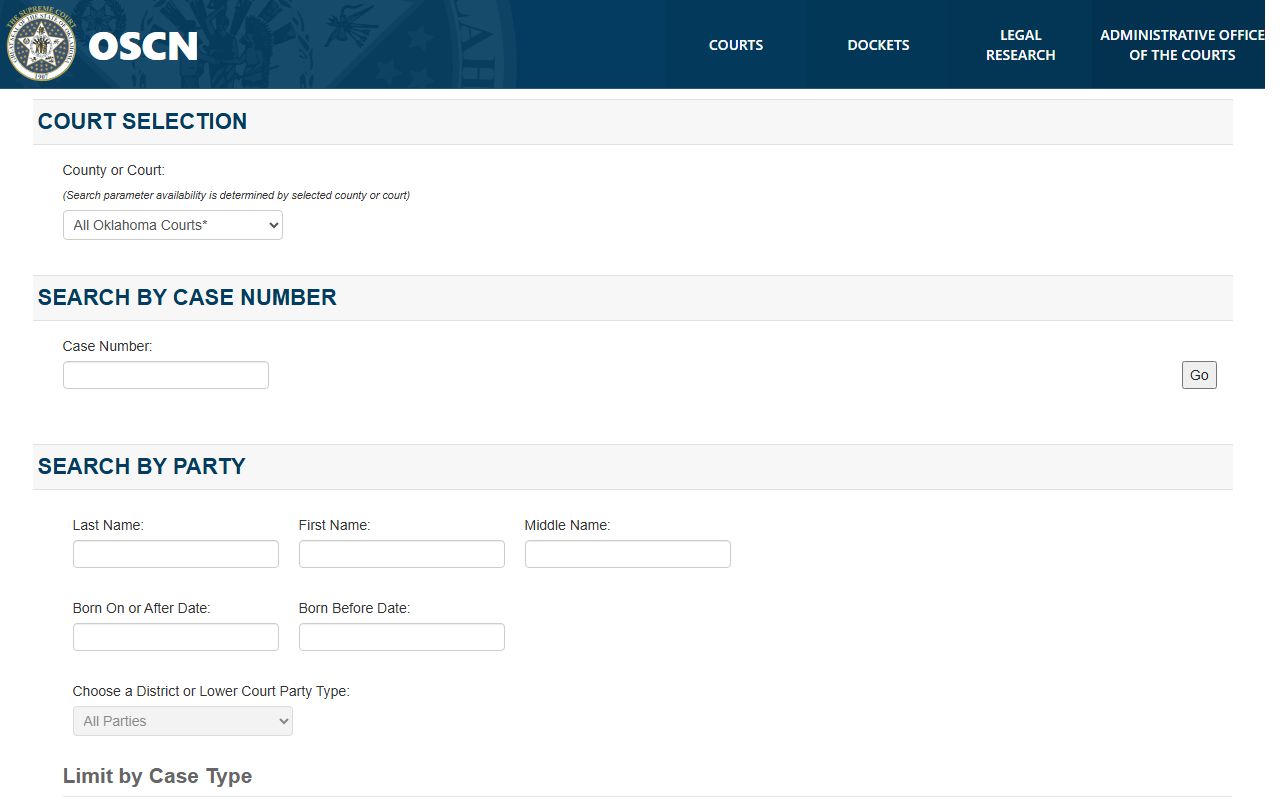
OSCN provides case type codes that help narrow results. CF stands for Criminal Felony, CM means Criminal Misdemeanor, and TR covers Traffic cases.
Note: Municipal court cases are handled on separate city systems and do not appear on OSCN. Only District Court criminal records show up in the state database.
How to Search Criminal Court Records in Oklahoma
Searching criminal court records in Oklahoma is straightforward. Go to the OSCN website and pick the county you want to search. Type in a last name and hit search. Results come up fast. Each result shows the case number, party names, and case status. Click a case to see the full docket with every filing, hearing, and order listed in order.
Case numbers follow a set format that tells you what type of case it is. A number starting with CF means a criminal felony. CM is a criminal misdemeanor. TR is a traffic case. The year follows the prefix. So CF-2024-00123 would be a felony case filed in 2024. This format is the same across all 77 counties. Knowing it helps when you have a case number and want to pull it up fast. The OSCN search also lets you filter by date range, which is helpful if you know roughly when a case was filed but not the exact number.
On Demand Court Records at ODCR gives you the same data in a different layout. Some people like its interface better for quick searches.
The ODCR system offers a clean search tool for pulling up Oklahoma criminal court records. It draws from the same state database as OSCN but presents results in a streamlined format.
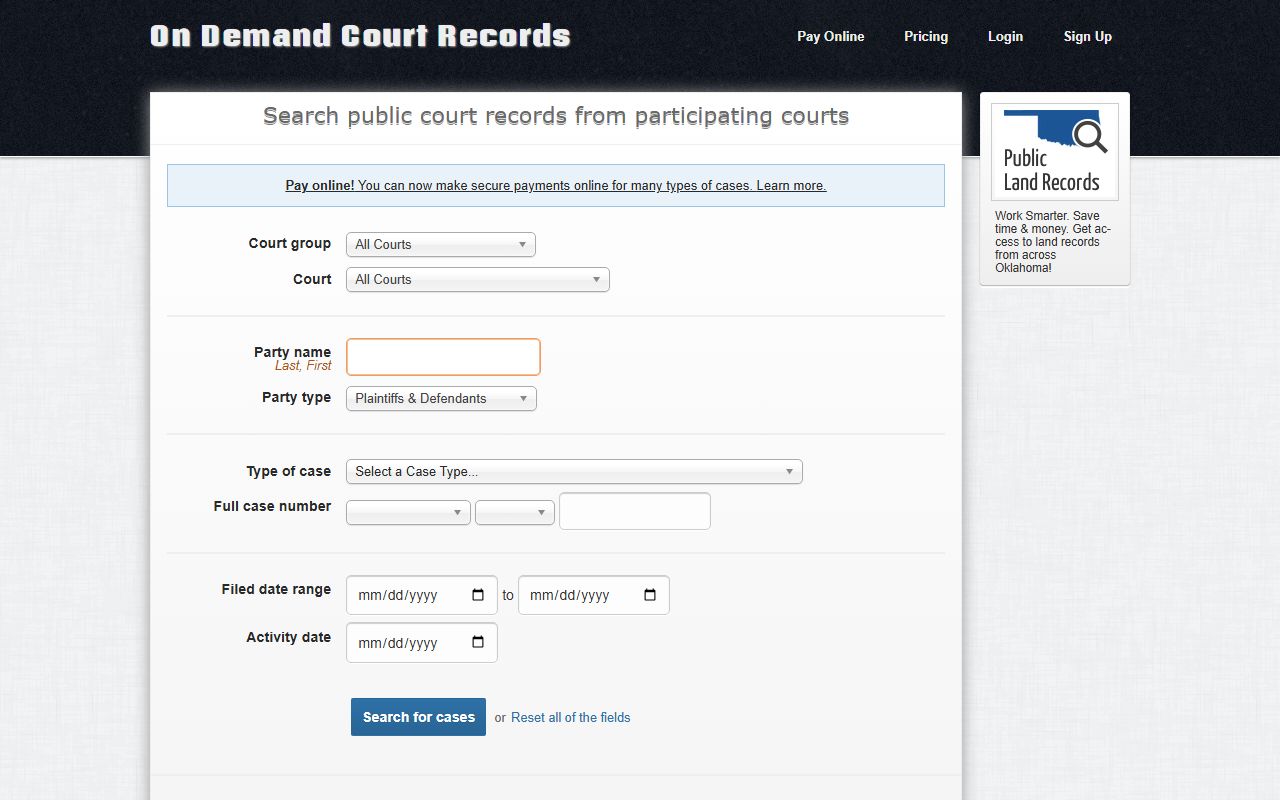
Both OSCN and ODCR are free. No account needed. No fees to search or view case details.
Types of Criminal Court Records in Oklahoma
Oklahoma criminal court records cover a range of case types. The most serious are felonies. Under Title 21 of Oklahoma Statutes, a felony is any crime that can be punished by death or prison time in a state facility. Common felonies include assault with a deadly weapon, robbery, drug trafficking, and homicide. Felony case files are thick. They often hold the information, preliminary hearing transcript, arraignment record, trial exhibits, jury instructions, and sentencing order.
Misdemeanors are less severe. They carry jail time of up to one year in the county jail and fines up to $500 for most offenses, or up to $1,000 for others. Misdemeanor records include DUI charges, petty theft, simple assault, and public intoxication. These cases move through the District Court as well but follow a shorter process than felonies.
Traffic violations that go to District Court also create criminal court records. DUI and reckless driving cases fall in this group. Regular speeding tickets from state troopers or county sheriffs may end up in District Court too, depending on the county. Municipal traffic tickets from city police stay in the city's own court system and do not appear on OSCN.
Under Title 22 of Oklahoma Statutes, criminal procedure rules set how cases move through the system. From arrest to arraignment, from preliminary hearing to trial, every step gets recorded and placed in the case file at the District Court.
Oklahoma Criminal Records Beyond the Courthouse
Criminal court records are just one part of the picture. The Oklahoma Department of Corrections runs an offender lookup tool that shows who is currently in state custody. You can search by name and see conviction details, sentence length, and projected release dates. This is separate from the court record but connects to it. The DOC database covers state prisons only, not county jails.
The Oklahoma Department of Corrections offender search page lets you look up current and past inmates in the state prison system.
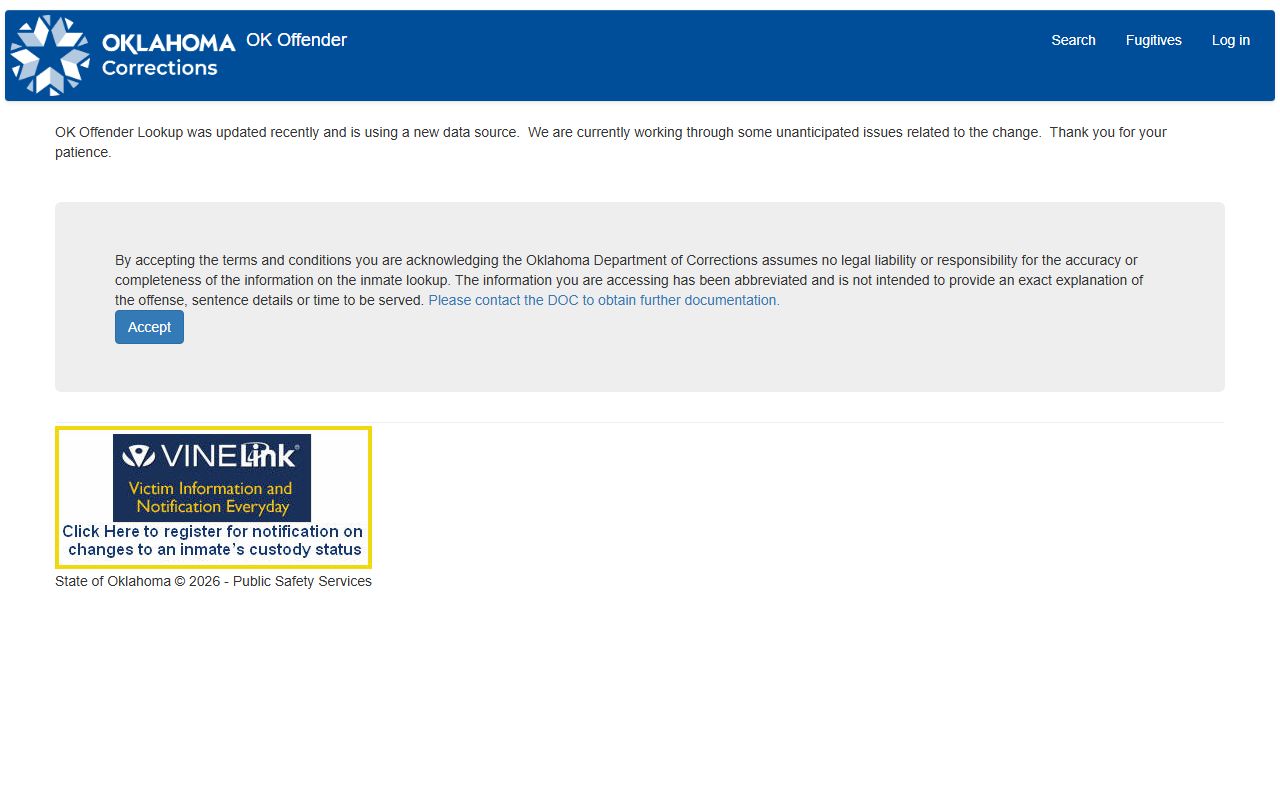
The DOC site shows facility location, custody level, and case details for each offender.
The VINE victim notification system lets crime victims track an offender's custody status. You can sign up for alerts when someone is released, transferred, or escapes. VINE covers county jails and state prisons across Oklahoma.
VINE provides real-time status updates on offenders in Oklahoma jails and prisons. Victims can register for automatic alerts about custody changes.
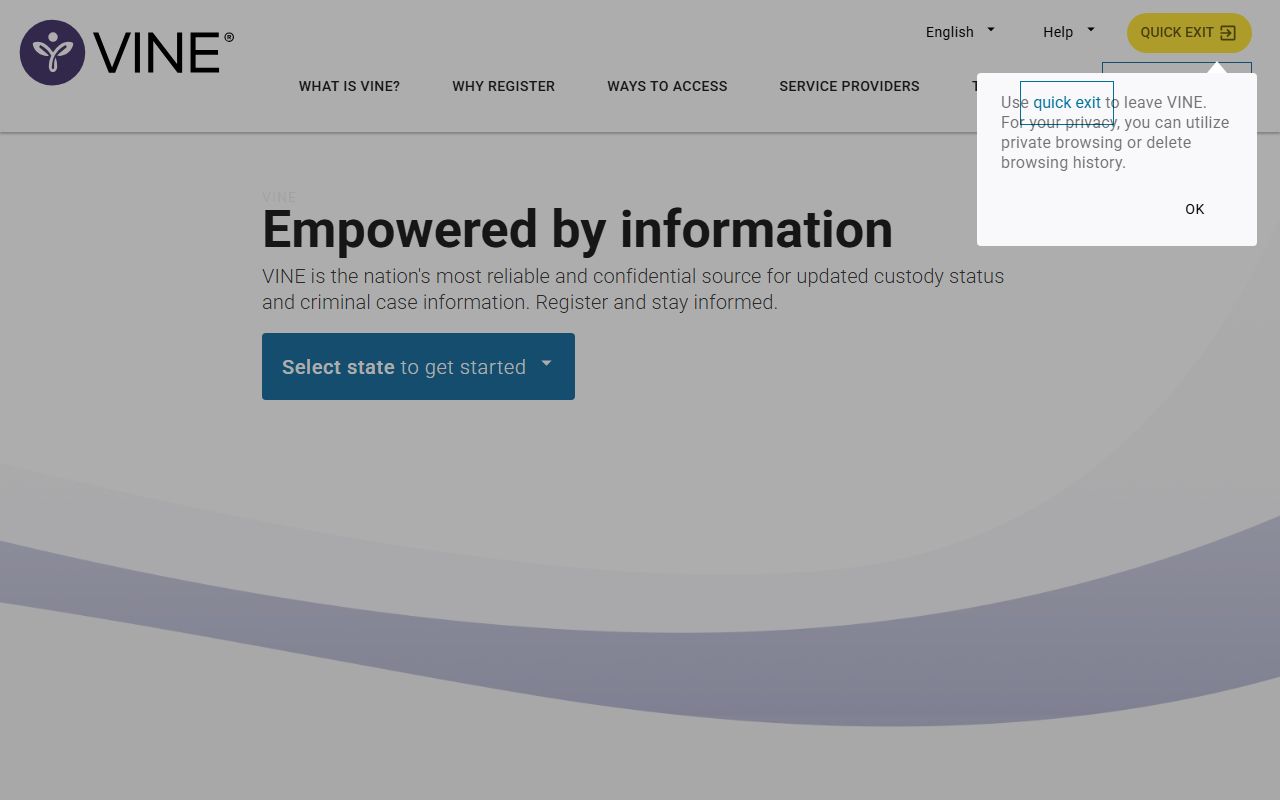
Registration is free and available around the clock.
For federal criminal cases in Oklahoma, the PACER system gives online access to records from the Western, Northern, and Eastern Districts of Oklahoma. Federal cases include drug conspiracies, bank fraud, firearms violations, and immigration offenses. PACER charges $0.10 per page but is free up to $30 per quarter.
The federal PACER system handles criminal court records from Oklahoma's three federal district courts.
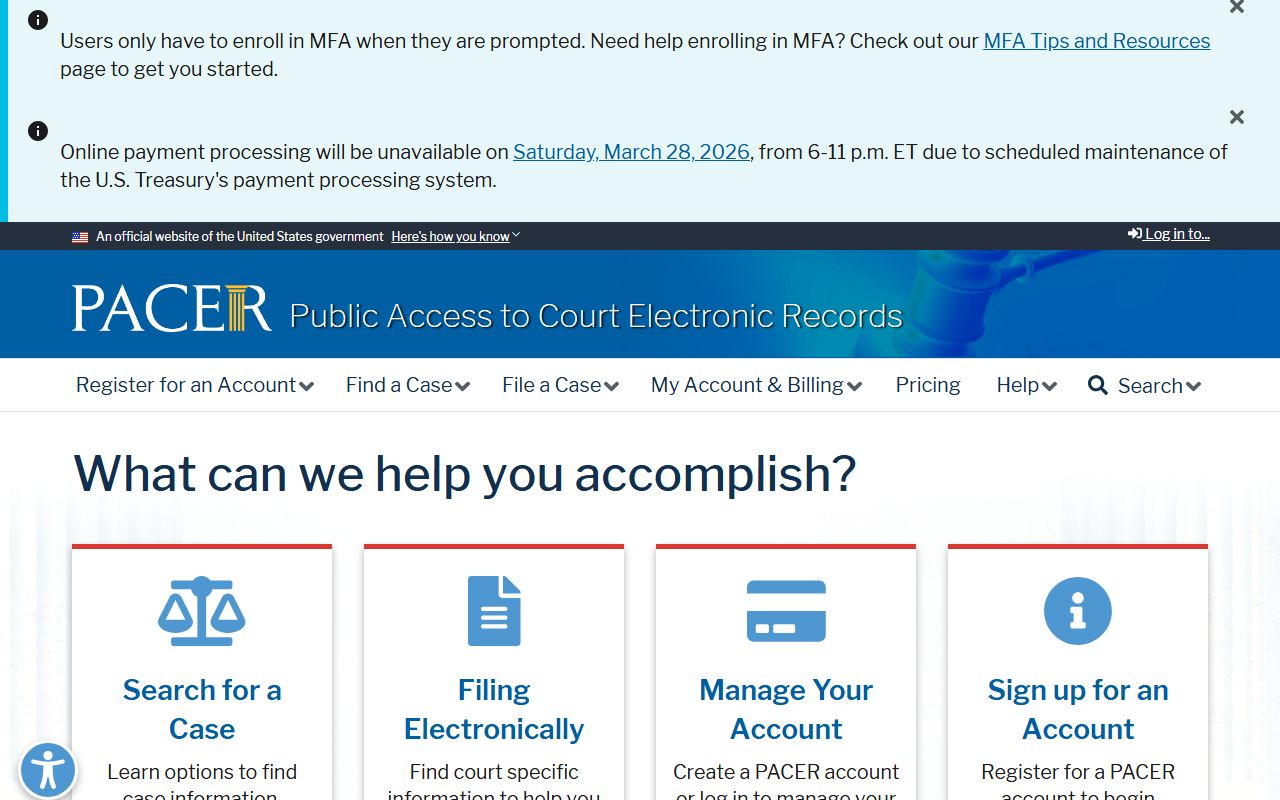
Federal cases follow a different numbering system and separate rules from state courts.
Oklahoma Criminal Court Records and Public Access
Most criminal court records in Oklahoma are public. The Oklahoma Open Records Act, Title 51 O.S. Section 24A.1, says the people have a right to know what their government is doing. Court records fall under this rule. You do not need to give a reason to ask for copies. You do not need to be part of the case.
There are some limits. Juvenile records are sealed by law. Expunged records have been legally erased and will not show up in any search. Cases sealed by court order are off limits to the public. Certain victim information stays private too. But the vast majority of adult criminal court records in Oklahoma are open for anyone to look at, either online through OSCN or in person at the courthouse.
The Oklahoma Attorney General's Office handles questions about the Open Records Act. If a government office refuses to release records you think should be public, the AG's office can help.
The Oklahoma Attorney General's website has guidance on open records requests and public access to government documents.
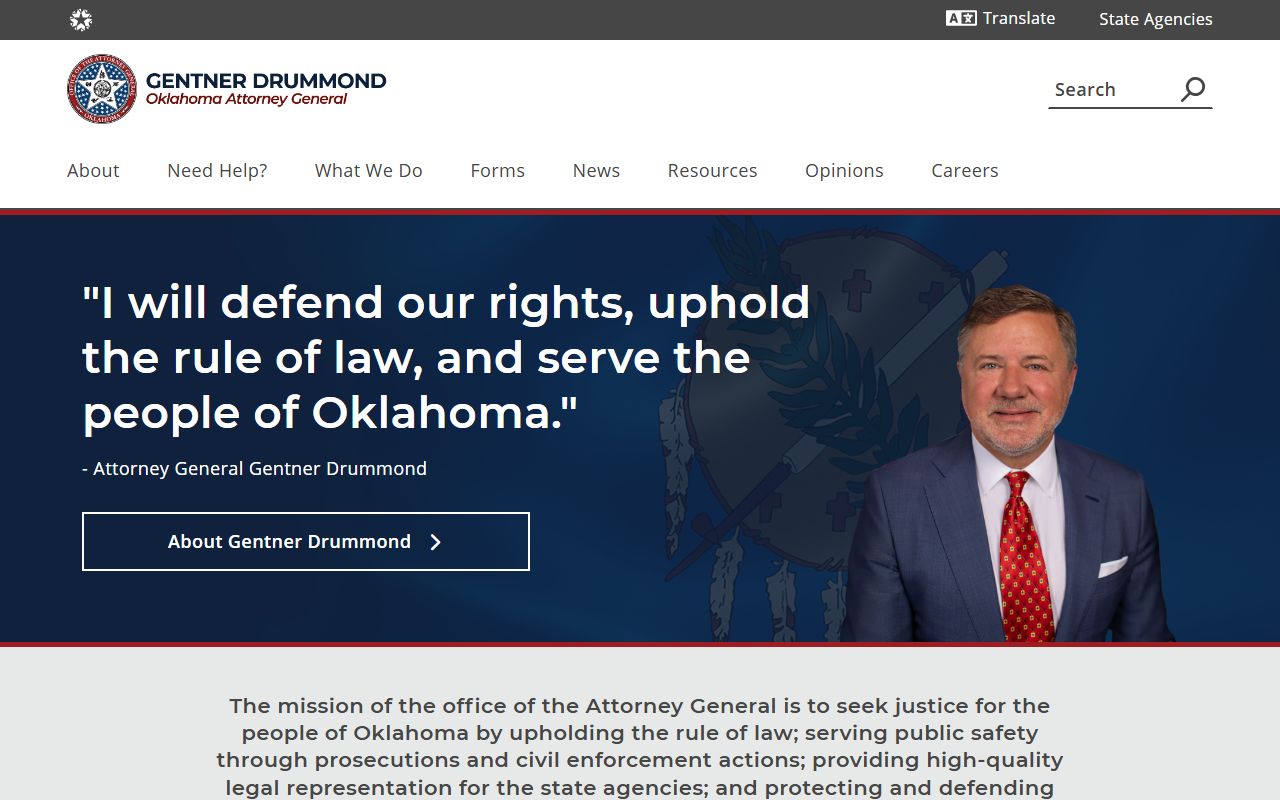
The AG publishes an annual report on open records compliance across the state.
Legal Help With Criminal Court Records
Legal Aid Services of Oklahoma provides free legal help to people who qualify based on income. They can assist with understanding criminal court records, expungement petitions, and other court matters. Legal Aid has offices across the state and handles cases in both urban and rural counties.
Legal Aid Services of Oklahoma offers free assistance to low income residents dealing with court cases and records issues.
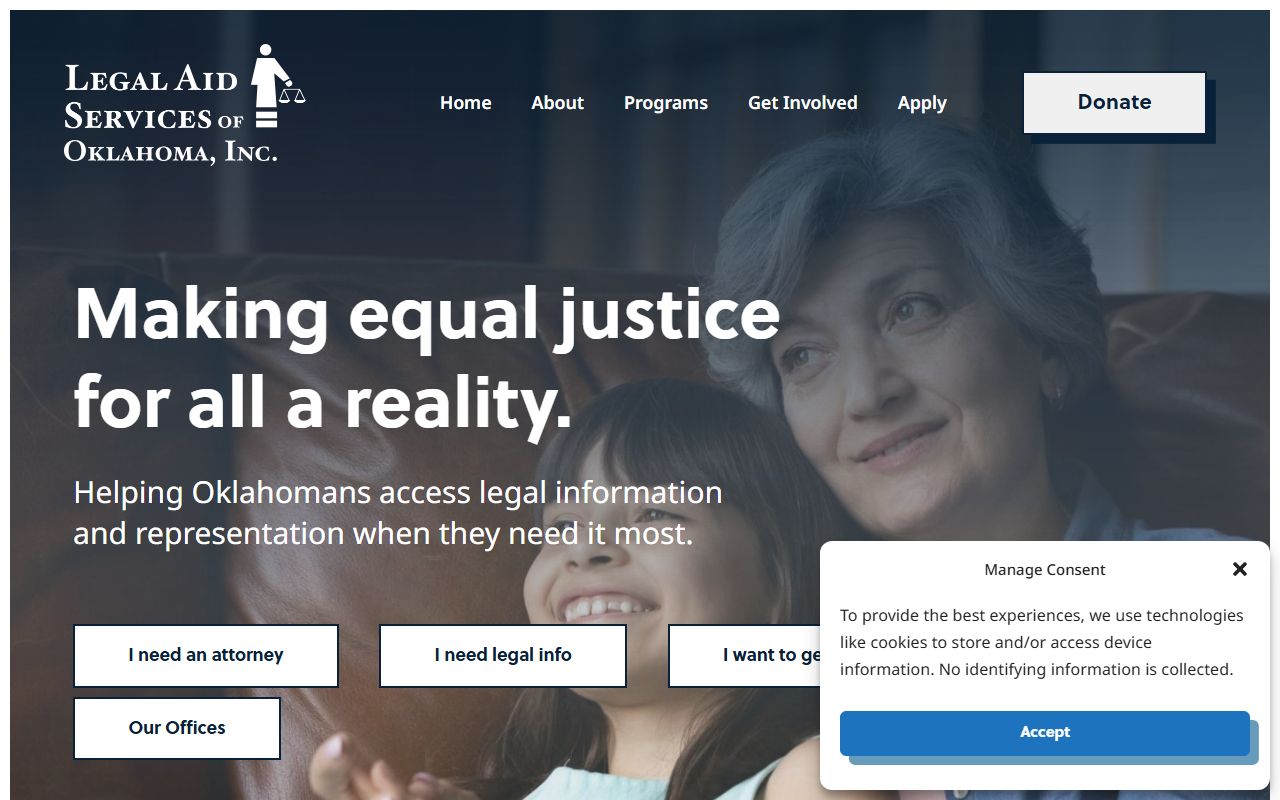
Contact Legal Aid to see if you qualify for free help with your case.
The Oklahoma Bar Association runs a lawyer referral service that can connect you with a criminal defense attorney. The first consultation may be at a reduced rate. The OBA also has public resources on understanding the court system, reading court records, and knowing your rights.
The Oklahoma Bar Association website lists resources for finding a lawyer and understanding court procedures.
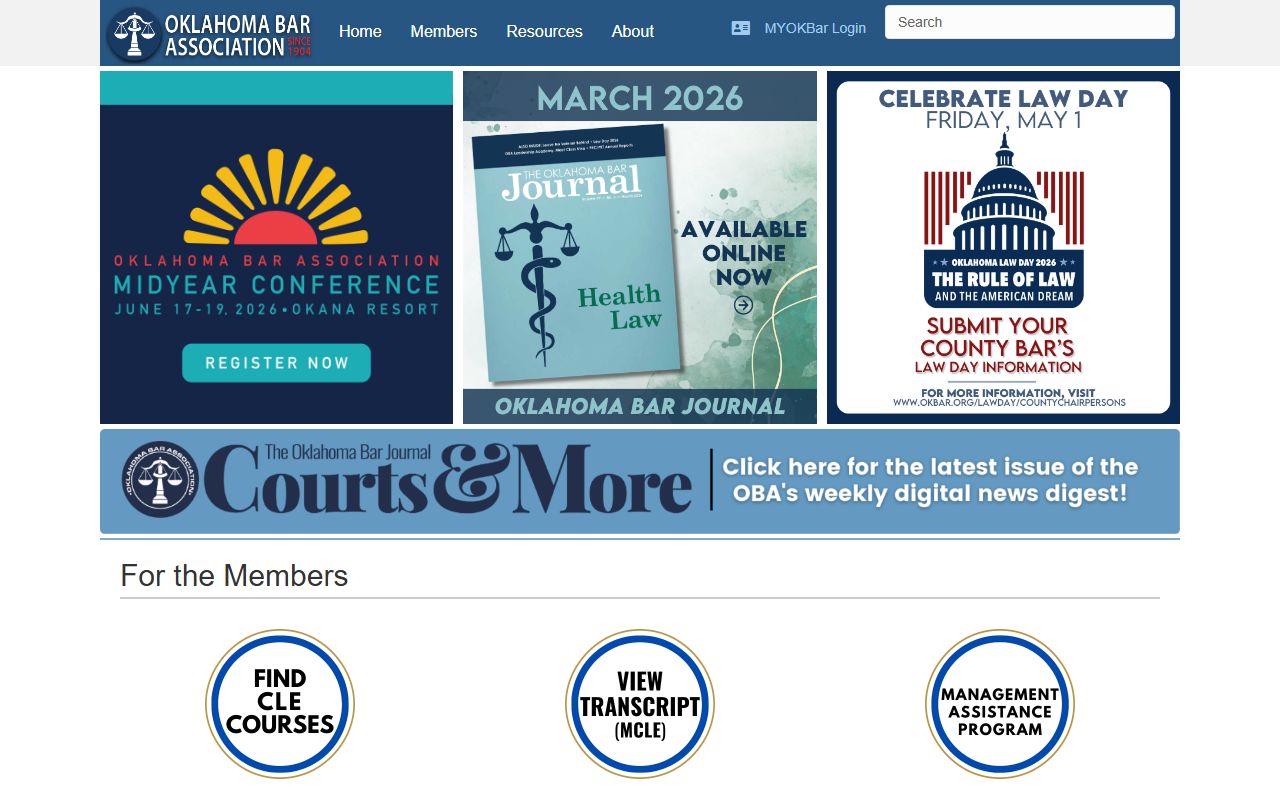
The OBA directory lets you search by practice area and location.
Expungement is the legal process for sealing or erasing a criminal record. Under Title 22 O.S. Section 18, certain offenses qualify for expungement after a waiting period. If a case was dismissed or resulted in acquittal, you may petition sooner. An expunged record will no longer show up on OSCN or at the Court Clerk's office. Legal Aid and private attorneys can help with the petition process.
Browse Oklahoma Criminal Court Records by County
Each of Oklahoma's 77 counties has its own District Court and Court Clerk that handles criminal cases. Pick a county below to find local contact info and resources for criminal court records in that area.
Criminal Court Records in Major Oklahoma Cities
Residents in major cities file criminal cases at the District Court in their county. Municipal courts handle city ordinance violations separately. Pick a city below to find where to go for criminal court records in your area.